Landscape Areas That Stay Dry and Defined
Decorative Rock Installation in Colorado Springs for reducing water use in planting beds and borders
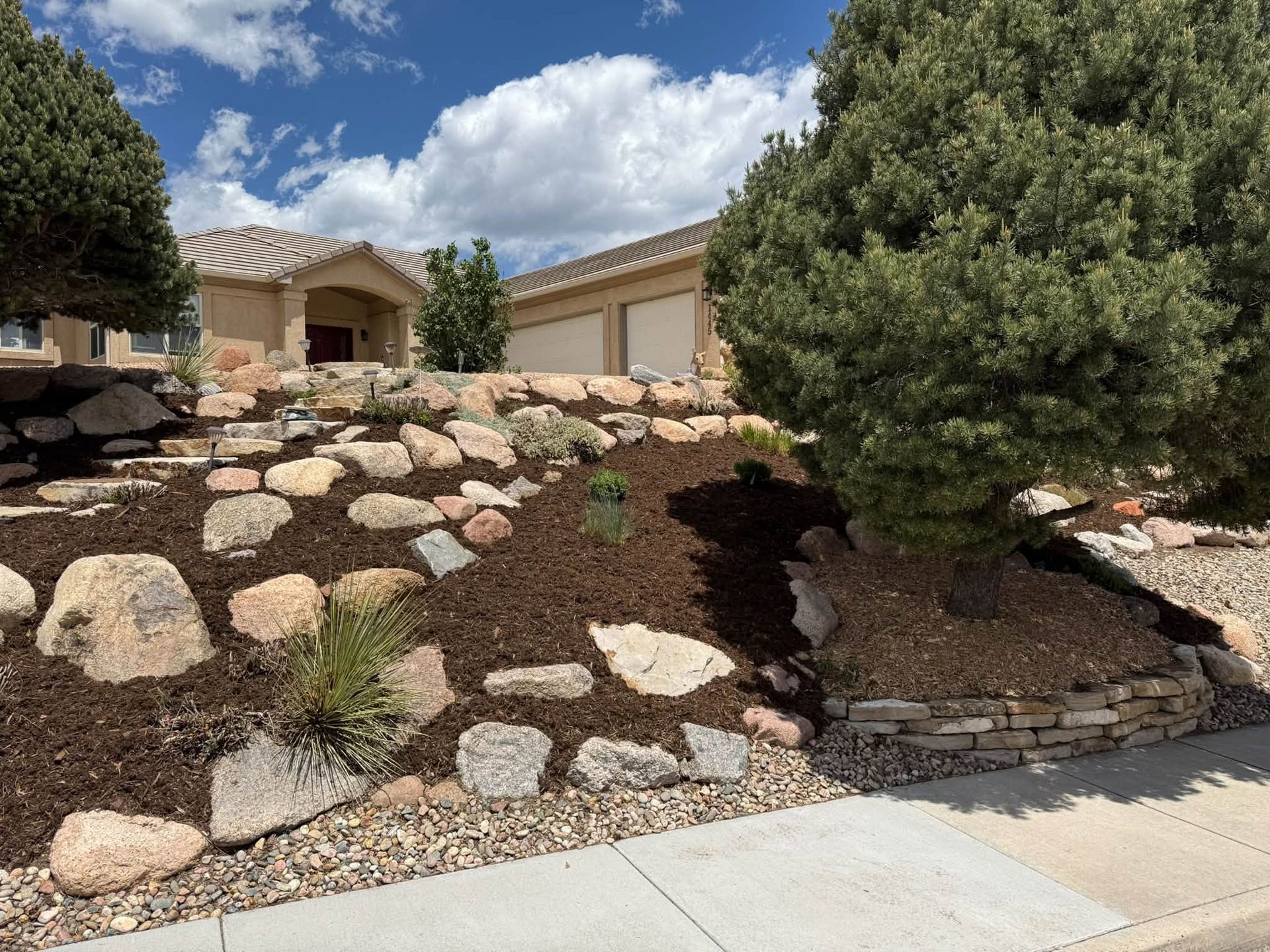
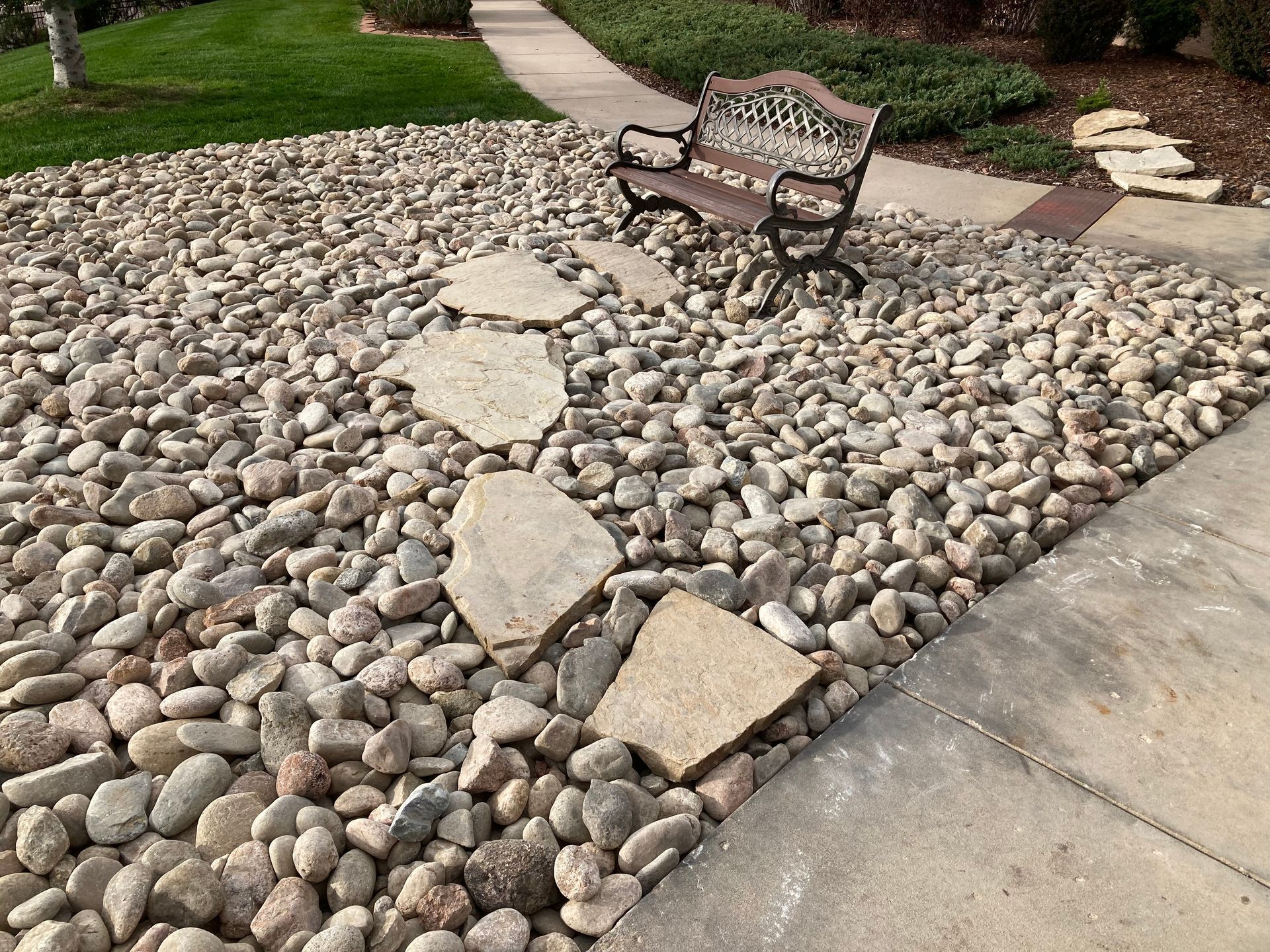
Colorado Springs properties with established turf in side yards, borders, and unused planting beds often use water on areas that no one walks on or enjoys. Refresh Landscapes installs decorative rock in place of turf and exposed soil, creating defined landscape areas that do not require irrigation or seasonal reseeding. The installation process replaces water-dependent surfaces with stable, textured coverage that holds up under sun exposure and seasonal temperature swings common across Colorado Springs and surrounding areas.
Rock installation begins with clearing existing vegetation or poorly performing turf, followed by soil grading to direct runoff away from structures. A fabric barrier is placed where appropriate to suppress regrowth, and selected decorative rock is spread evenly to a depth that prevents displacement while allowing the base layer to remain visible. Edge treatments using metal or plastic borders keep rock in place along driveways, walkways, and planting beds, maintaining clean lines even after wind or rainfall.
Request a property visit to review rock size, color, and placement options for your specific beds and borders..
What Changes Once Rock Replaces Turf or Soil
After rock is placed, bare soil no longer erodes during afternoon thunderstorms, and wind does not lift dust from exposed beds. The surface temperature in rock-covered areas remains stable compared to bare dirt, which heats rapidly during midday sun and cools quickly at night. Decorative rock reflects varying amounts of light depending on the color and size selected, which adds visible contrast next to stucco, siding, or darker plant foliage.
Refresh Landscapes prepares beds so that rock sits slightly below adjacent hardscape edges, preventing migration onto walkways or driveways during rain. Once installed, rock areas do not require mowing, fertilization, or seasonal aeration. Weeds that do emerge appear along edges where fabric meets hardscape and can be removed by hand or treated with targeted applications rather than broadcast spraying.
Rock installation works alongside existing landscape features and does not require removal of mature trees, established shrubs, or functional irrigation zones. Properties with partial shade, slopes steeper than ten degrees, or heavy clay soil may require additional grading or fabric anchoring to keep rock in place over multiple seasons. Customers who later want to adjust planting beds or add new shrubs can remove rock sections without disturbing surrounding areas, since rock does not bind to soil or fabric the way organic mulch does..
What Property Owners Ask About Rock Placement
Rock installation in Colorado Springs addresses questions about material selection, site preparation, and long-term appearance for properties looking to reduce turf without sacrificing visual definition.
What size and color of rock works best for planting beds?
Rock between one and three inches in diameter stays in place during wind and rain, while smaller gravel migrates more easily. Color choice depends on surrounding materials—lighter tones reflect more heat and show less dust accumulation in dry months common to Colorado Springs, while darker rock provides stronger contrast against stucco and light-colored hardscape.
How is the ground prepared before rock goes down?
Existing turf or weeds are removed, and the soil surface is graded to eliminate low spots where water would pool. Fabric is rolled out and secured with staples, then rock is spread evenly using wheelbarrows and rakes to avoid tearing the fabric or compacting the soil beneath.
Does rock need to be replaced over time?
Rock does not decompose or break down under sun exposure, so it does not require seasonal replenishment the way organic mulch does. Over several years, dust and organic debris may settle between rocks, and occasional rinsing or raking restores the original appearance without adding new material.
Can plants grow through installed rock?
Yes, shrubs and perennials are planted by cutting openings in the fabric and digging into the soil below. Rock is pulled back during planting and then replaced around the root zone, leaving a small cleared circle at the base of each plant for water penetration.
When should rock be installed to avoid weather delays?
Installation can proceed during any month when the ground is not frozen or saturated. Spring and fall offer moderate temperatures that make site preparation easier, but summer installation works as long as fabric and rock are secured before afternoon thunderstorms arrive.
Refresh Landscapes evaluates bed dimensions, existing vegetation, and site drainage during the estimate process. Arrange an on-site consultation to review decorative rock options and receive a project estimate based on your property's layout and current landscape condition.