Established Lawn Coverage Without Waiting for Seed
Sod Installation in Colorado Springs for properties needing immediate lawn coverage in bare or damaged turf areas
Sod provides an established turf surface within hours rather than weeks, which matters for properties preparing for events, completing construction projects, or repairing sections where erosion, pet damage, or irrigation failure has left bare ground. Refresh Landscapes removes existing dead turf or weeds, grades the soil to eliminate low spots and direct drainage, and lays fresh sod in tight seams that root into prepared soil when watered consistently during the establishment period. Colorado Springs properties with clay-heavy soil or slopes that channel runoff require additional preparation to ensure sod roots penetrate beyond the delivered soil layer and anchor into the existing ground.
Installation begins with clearing the area of debris, rocks, and dead vegetation. Soil is graded smooth using a landscape rake, and low spots are filled to prevent water from pooling under the new sod. A starter fertilizer may be applied to the soil surface before sod is placed, though this depends on existing soil nutrient levels and the time of year. Sod rolls are laid in staggered seams to avoid long continuous joints, and edges are trimmed with a utility knife to fit around walkways, beds, and hardscape features.
Request an estimate based on your lawn area and current site conditions to determine soil preparation needs and sod quantity.
How Sod Establishes in Colorado's Climate
Sod installation in Colorado Springs requires attention to watering frequency during the first two to three weeks, since dry air and intense sun cause delivered sod to lose moisture faster than it would in more humid regions. Daily watering is necessary immediately after installation, with frequency decreasing as roots grow into the underlying soil. Foot traffic is avoided during establishment to prevent seams from separating or sod from shifting before roots anchor.
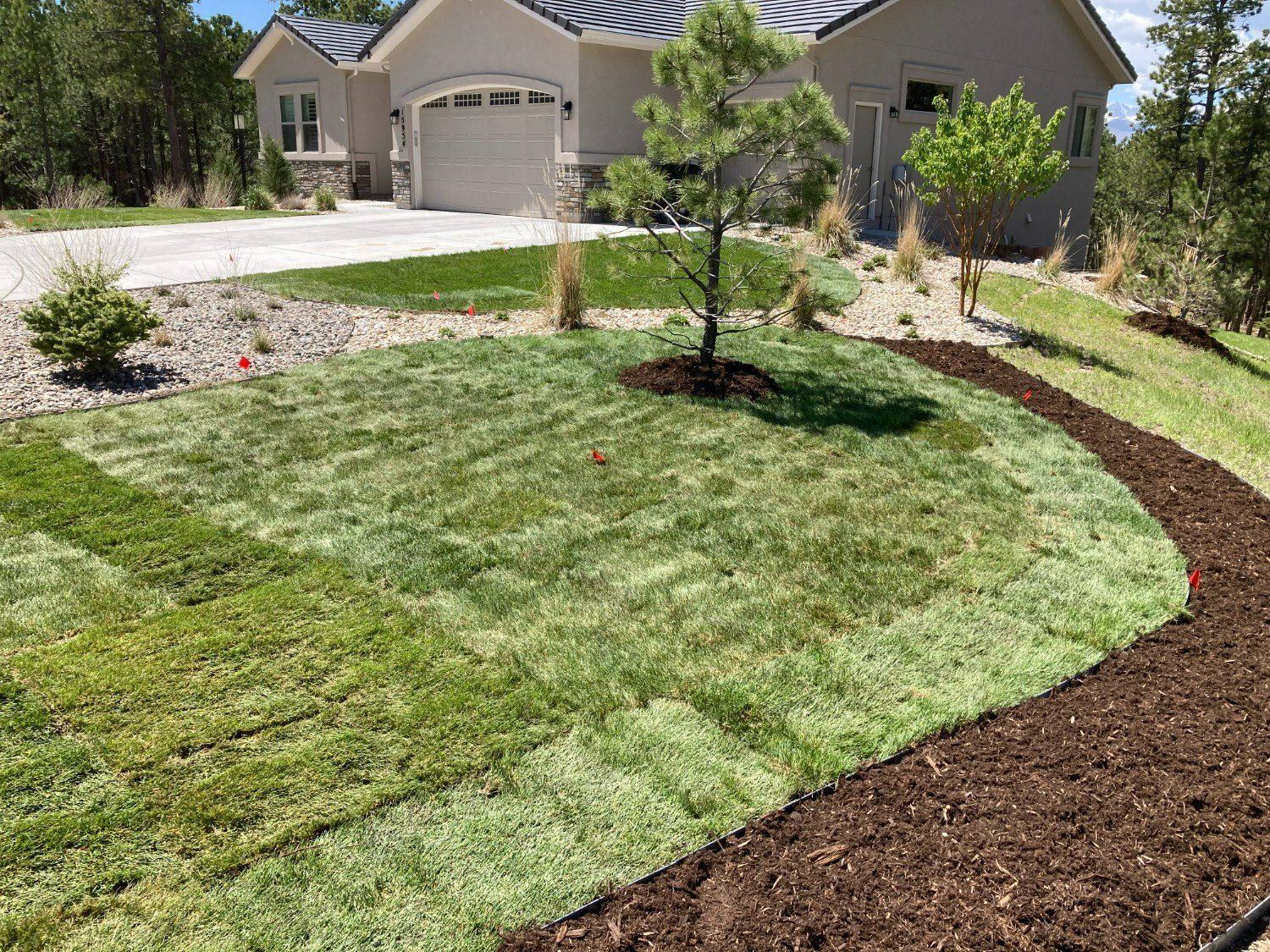
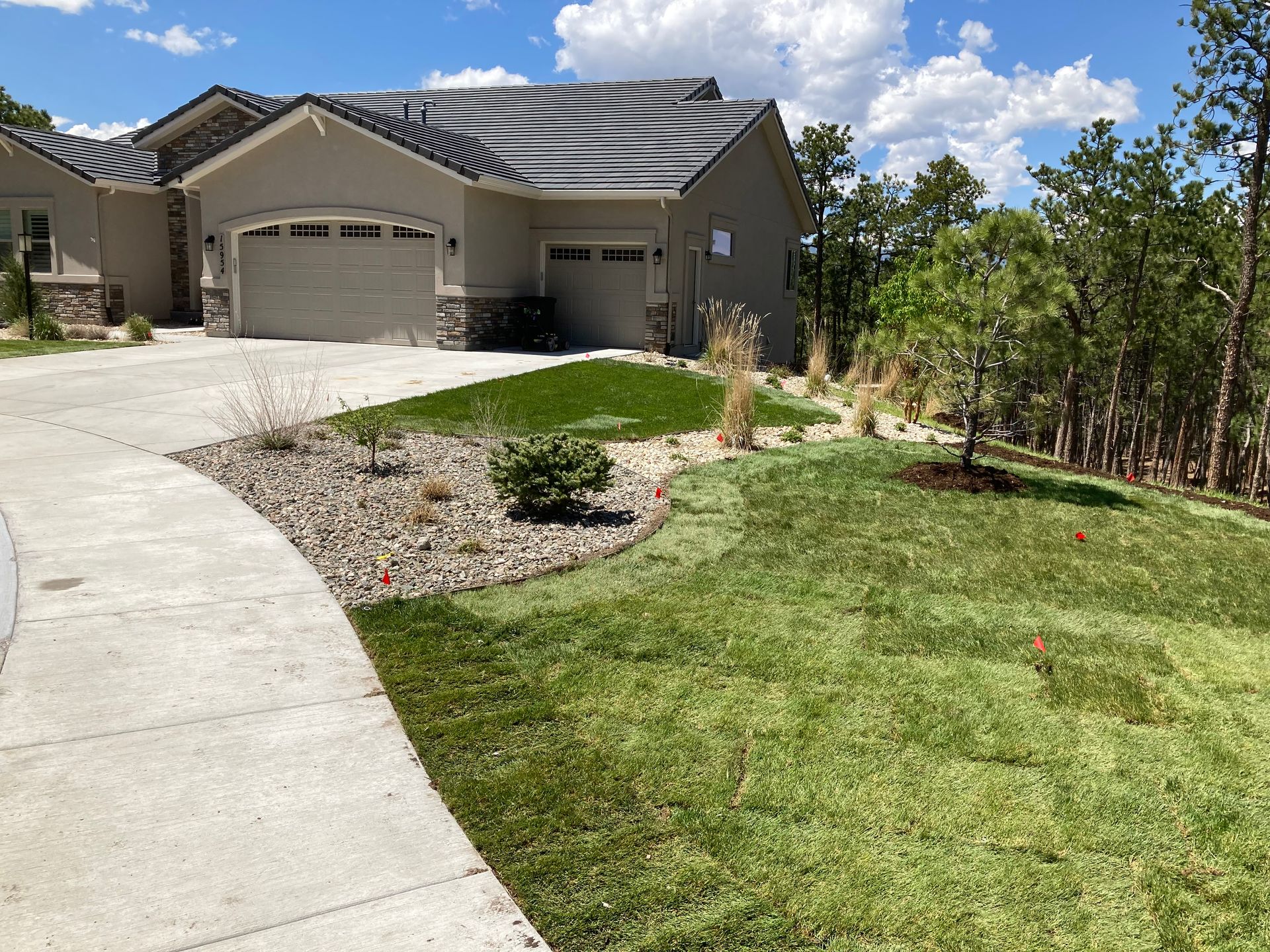
Once sod is installed and watered, seams between rolls become less visible as grass blades grow and fill gaps. The surface feels firm underfoot rather than spongy or loose, indicating that roots have penetrated the soil below the delivered sod layer. Grass color transitions from the slightly pale appearance common in freshly delivered sod to the deeper green typical of actively growing turf, usually within ten to fourteen days if watering and temperature conditions support root development.
Sod performs best when installed during spring or fall, when daytime temperatures remain moderate and nighttime cooling reduces moisture loss. Summer installation is possible but requires more frequent watering and careful monitoring to prevent edges from drying out before roots establish. Winter installation is not recommended, since frozen ground prevents root penetration and sod remains vulnerable to desiccation from wind exposure. Properties with irrigation systems benefit from having zones adjusted to provide even coverage across newly sodded areas, while those relying on hose watering need enough hose length to reach all sections without creating dry spots.

Common Questions About This Service
Sod installation prompts questions about site readiness, watering schedules, and how delivered sod compares to existing turf on Colorado Springs properties.
What type of sod works best in Colorado Springs?
Kentucky bluegrass blends are the most common choice for residential lawns, offering cold tolerance for winter and recuperative growth during the growing season. Tall fescue may be used in shaded areas or where lower water use is a priority after establishment, though it has a coarser texture than bluegrass.
How soon can the lawn be used after sod is installed?
Light foot traffic can resume once roots have anchored, typically two to three weeks after installation. Heavy activity, such as running or playing, should wait until the sod has been mowed at least twice and roots have fully integrated with the soil below.
Does sod require different care than seeded lawns?
Initial watering is more intensive for sod, but once established, maintenance is identical to seeded turf. Sod provides immediate erosion control and a finished appearance, while seed takes longer to cover bare ground and remains vulnerable to washout during summer thunderstorms common in Colorado Springs.
What site preparation is needed before sod arrives?
Existing vegetation is removed, the soil surface is graded smooth, and rocks or debris that would prevent sod from making soil contact are cleared away. Compacted areas are loosened with a rake or tiller to allow roots to penetrate, and low spots are filled to prevent water pooling.
When should sod installation be scheduled?
Spring and fall offer the best establishment conditions, with moderate temperatures and more predictable moisture. Summer installations require more intensive watering, and sod delivered during heat waves may arrive stressed, requiring extra care to prevent browning along seams and edges.
Refresh Landscapes evaluates soil condition, slope, and irrigation access during the estimate process to determine preparation requirements and sod quantity. Arrange an on-site consultation to review your lawn area and receive a project estimate based on current site conditions.