
Planting Beds That Look Finished and Protected
Mulch Installation in Colorado Springs for flower beds, tree areas, and planted landscapes needing clean coverage
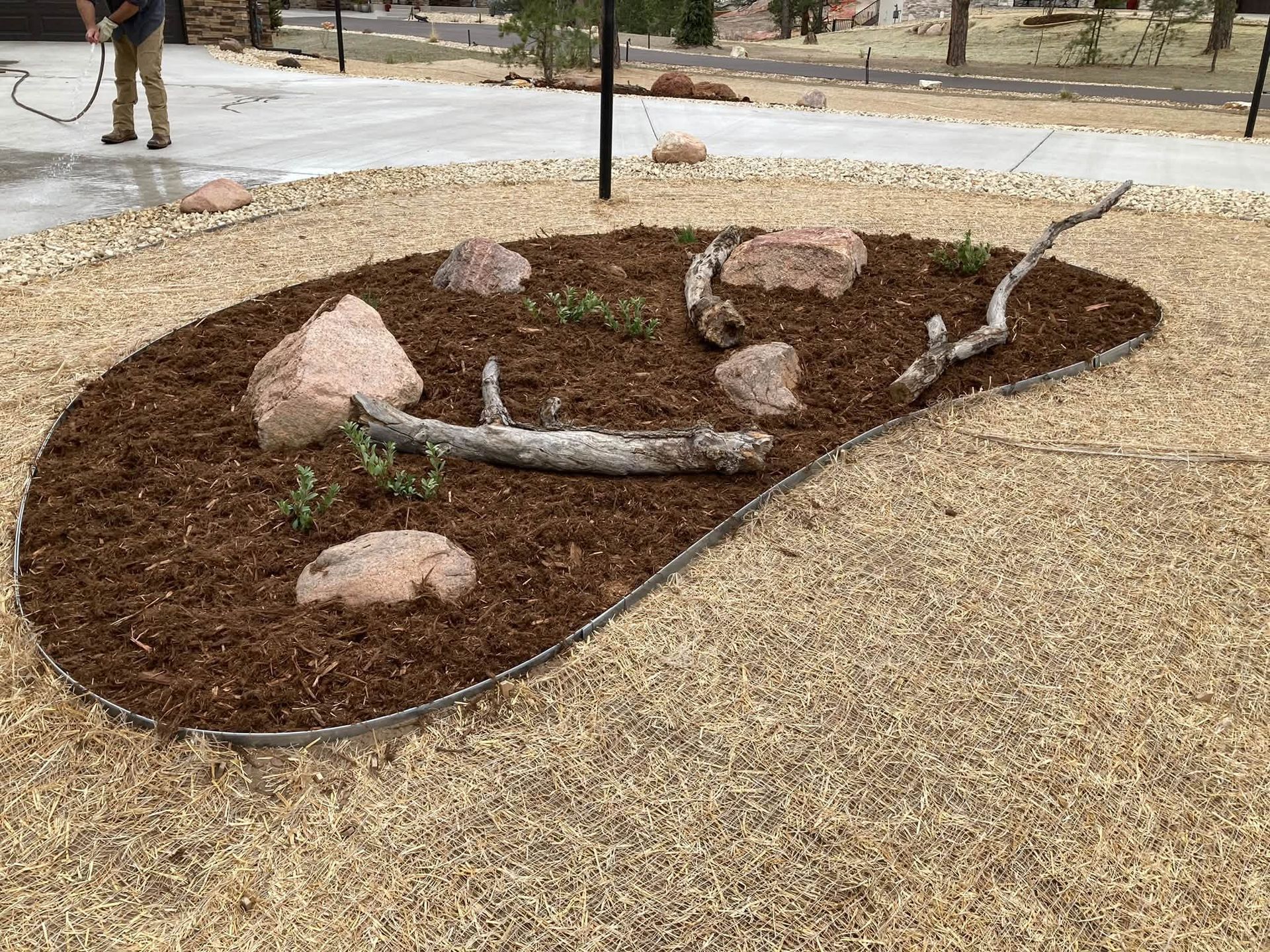
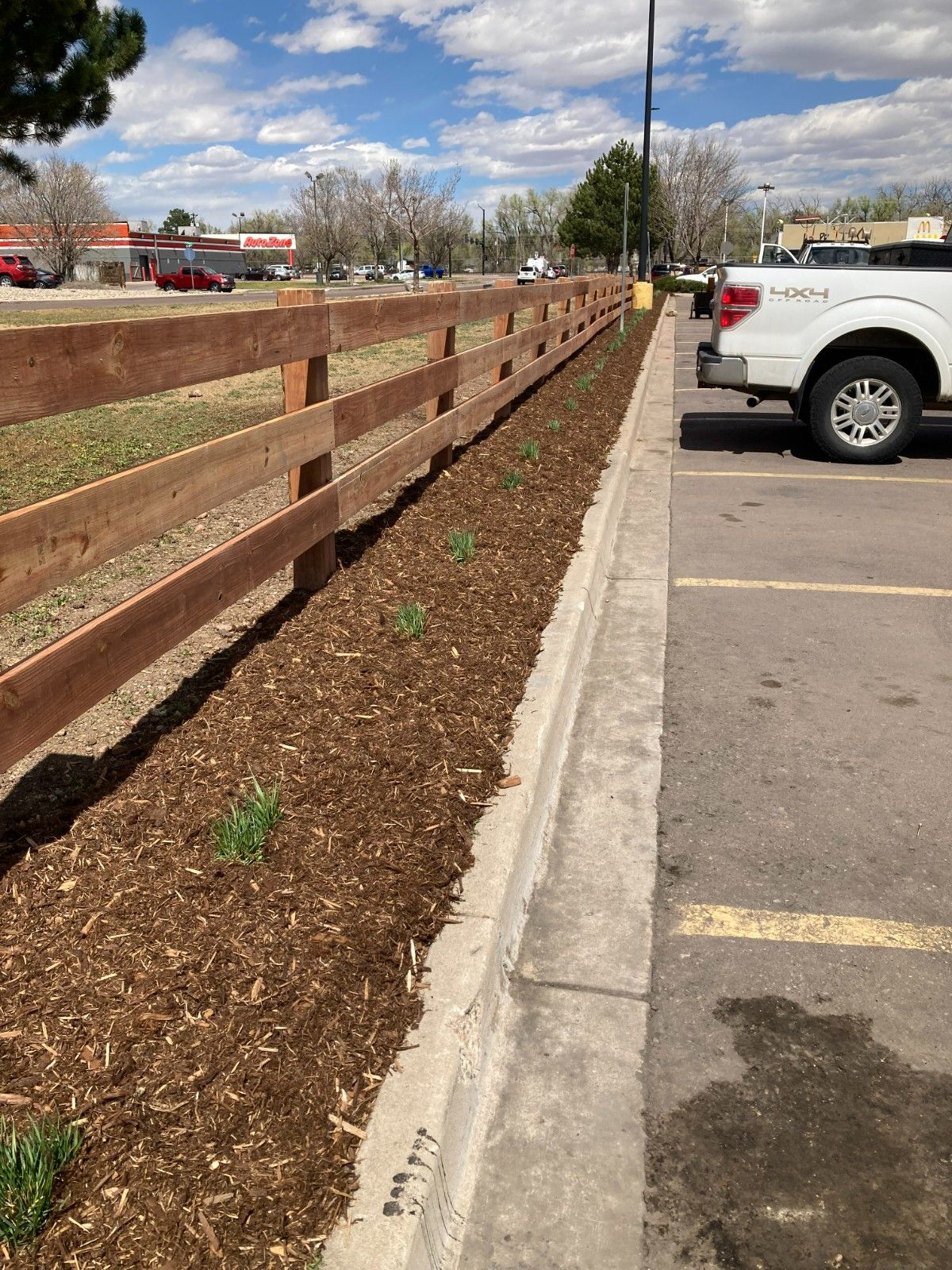
Exposed soil in planting beds dries out quickly under Colorado's intense sun and frequent afternoon wind, leaving plant roots vulnerable to temperature swings and moisture loss between waterings. Mulch installation covers bare soil with a consistent layer of organic material that insulates root zones, reduces surface evaporation, and provides a uniform appearance across flower beds, tree rings, and landscape borders. Refresh Landscapes prepares beds by removing weeds and debris, defines edges with installed borders or recut lines, and places mulch at a depth that protects soil without burying plant stems or creating buildup against tree trunks.
Bed preparation involves clearing old mulch that has decomposed into soil, pulling weeds, and loosening compacted surface soil with a rake or cultivator. Edges are recut using a half-moon edger or bordered with metal, plastic, or stone to separate beds from adjacent turf or hardscape. Mulch is delivered in bulk or bags and spread by hand using rakes and pitchforks, with material pulled away from the base of plants to prevent moisture accumulation against stems and bark.
Arrange an on-site visit to review bed dimensions and discuss mulch type and quantity for your landscape areas.
What Mulch Installation Actually Accomplishes
Mulch is installed to a depth of two to three inches, which provides coverage without creating a dense mat that prevents water from reaching soil below. Shredded bark, wood chips, and composted mulch are the most common types used in Colorado Springs landscapes, with selection depending on desired color, texture, and how quickly the material breaks down. Darker mulches such as shredded hardwood or dyed brown bark show stronger contrast against light-colored stone and stucco, while natural cedar or pine mulch fades to gray over time as it weathers under sun exposure.
After mulch is placed, soil underneath remains cooler during midday heat and retains moisture longer between waterings. Weeds that do emerge are easier to pull since mulch prevents seeds from making direct contact with soil, and the looser texture of fresh mulch allows for quick hand removal. Mulched beds appear visually complete, with clean edges and consistent color across the entire planted area, and the material settles slightly over the first few weeks as it absorbs moisture from irrigation or rainfall.
Mulch breaks down over time as microbes decompose organic material, which means beds require replenishment every one to two years depending on mulch type and sun exposure. Properties with steep slopes may experience mulch migration during heavy rain, and additional edging or landscape fabric can help keep material in place. Mulch installation pairs naturally with new planting projects or bed redesigns, since both involve soil preparation and layout planning. Customers who want to reduce long-term mulch replacement can consider decorative rock in high-visibility areas while using organic mulch in beds with perennials and annuals that benefit from gradual soil improvement as mulch decomposes.

What Customers Ask About Mulch Projects
Mulch installation in Colorado Springs involves questions about material choices, how often mulch needs replacement, and how it fits into broader landscape maintenance.
What type of mulch lasts longest in Colorado's climate?
Shredded hardwood and larger wood chips decompose more slowly than fine-textured mulch and hold up better under intense sun and wind. Cedar and pine mulches resist decomposition due to natural oils but fade to gray as those oils break down over one to two seasons.
How deep should mulch be installed?
Two to three inches of mulch provides effective coverage without smothering plant roots or preventing water penetration. Mulch piled deeper than four inches can create anaerobic conditions that slow decomposition and promote fungal growth, while mulch spread too thin exposes soil and reduces the insulating and weed-suppressing benefits.
Can mulch be applied over existing old mulch?
If old mulch has broken down into a thin, soil-like layer, new mulch can be added on top after weeds are removed. If old mulch is still thick and matted, it should be removed or redistributed to avoid excessive buildup that prevents water from reaching plant roots.
Does mulch attract insects or pests?
Mulch provides habitat for beneficial insects such as ground beetles that feed on pest larvae, but it does not attract termites or carpenter ants unless wood is already decaying and in contact with structures. Mulch is kept several inches away from building foundations to prevent moisture accumulation and pest access points.
When is the best time to install fresh mulch?
Spring mulch installation prepares beds for the growing season and provides a clean appearance as perennials and annuals emerge. Fall installation protects soil and roots heading into winter, and mulch installed in autumn breaks down more slowly since microbial activity decreases in cooler temperatures.
Refresh Landscapes evaluates bed layout, existing mulch condition, and plant density when preparing mulch installation estimates. Reach out to schedule an on-site evaluation and discuss mulch options tailored to your property's landscape features.